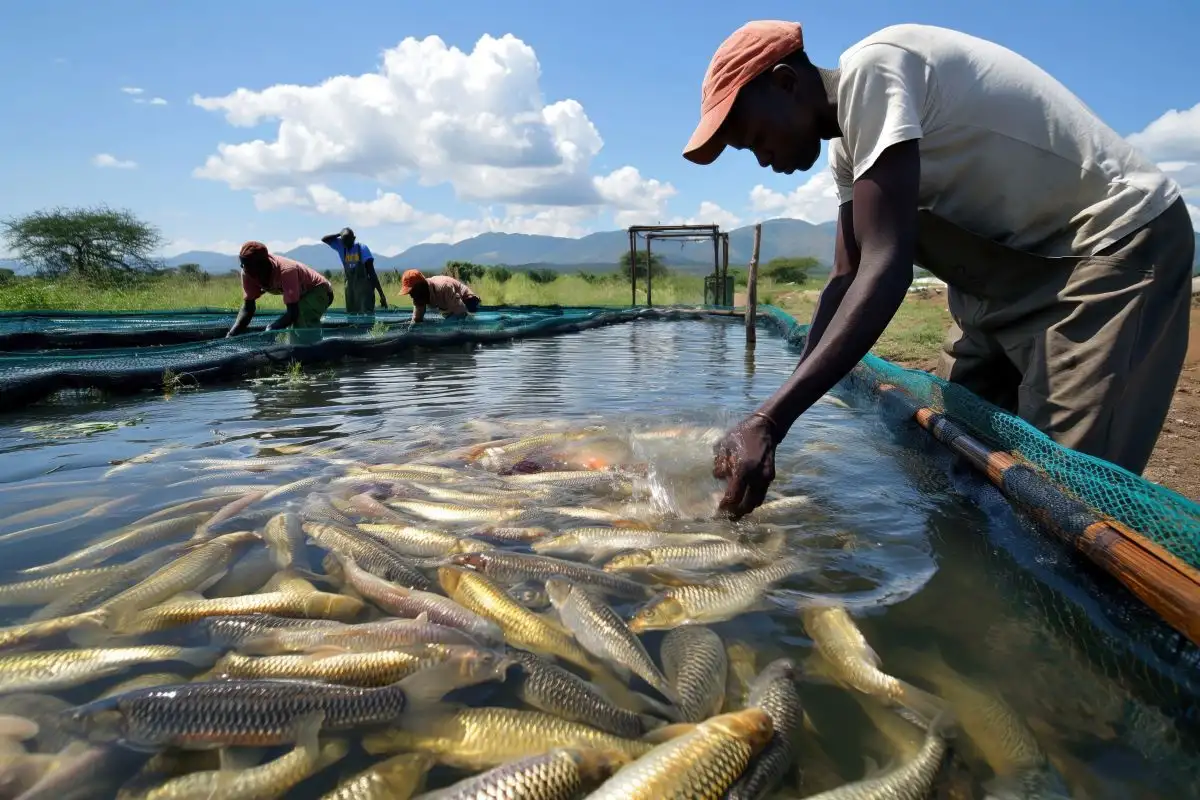
Aquaculture, or fish farming, is one of the fastest-growing sectors in Kenya’s agriculture industry. With rising demand for fish protein and declining wild fish stocks, investors can tap into a market that is both lucrative and sustainable. Fish such as tilapia and catfish are in high demand across urban centers, hotels, restaurants, and local markets.
Why Fish Farming is Profitable:
- High Yield Per Cycle: A standard pond of 200–300 m² can produce 2–3 tons of fish per cycle, depending on species and management practices.
- Rapid Growth Cycle: Tilapia and catfish mature within 6–8 months, allowing for predictable harvests and multiple annual cycles.
- Premium Pricing: Fresh, farmed fish fetches higher market prices than wild-caught fish due to consistent quality and size.
- Low Land Requirements: Fish farming requires less land compared to conventional livestock or crops, making it ideal for smallholder investors.
- Controlled Environment: Ponds or tanks reduce risks from floods, droughts, and disease outbreaks, improving survival rates and yields.
Investment Overview:
- Project Setup Cost: Ksh 350,000 per aqua pond (includes pond construction, fingerlings, feed, aeration, and basic water quality management).
- Revenue per Cycle: Ksh 450,000–600,000 depending on species and market demand.
- Expected ROI: 25–40% per harvest cycle, with potential annualized returns exceeding 100% with two cycles per year.
- Employment & Social Impact: Each pond employs 4–6 youth and women, generating income and skills development opportunities in aquaculture management.
Strategic Advantages:
- Year-Round Production: Controlled feeding and water management ensure consistent production, minimizing seasonal fluctuations.
- Market Assurance: Partnerships with hotels, restaurants, and distributors secure off-take agreements for every cycle.
- Scalability: Multiple ponds can be added to increase output, enabling investors to expand with minimal additional infrastructure.
- Transparency: Investors track fish growth, pond conditions, and harvests through real-time updates and monitoring via AgriKash.
Aquaculture is not just a profitable investment, it is a sustainable and socially responsible venture. By investing in fish farming, you gain predictable high yields, secure returns, and measurable impact, all while contributing to food security and community empowerment.


 Admin
Admin



 Money Grow!